Dark web markets shut down in three ways: exit scams, where operators vanish with the escrow (like Empire Market's tens of millions); police seizure (Silk Road, AlphaBay, Hansa); or slow collapse from DDoS attacks and lost trust. It's structural, not bad luck — success makes a market both a bigger prize to steal and a bigger target to seize.
- Three endings: exit scam, seizure, or collapse
- Empire Market exit-scammed with ~tens of millions
- Silk Road, AlphaBay and Hansa were all seized
- Hansa was secretly run by police before takedown
- Success is what kills a market — it's structural
A striking fact about dark web markets: none of the big ones are still here. Not one major marketplace has survived. Every headline name has ended, and the ways they end fall into a short, repeating list. This isn't bad luck — it's the business model reaching its only possible conclusions.
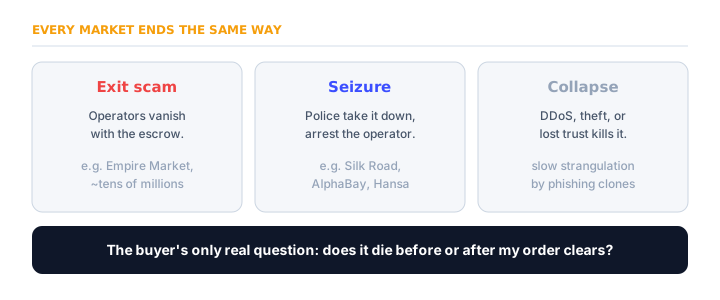
Exit scams
Because a market holds users' cryptocurrency in escrow, its operators always sit on a growing pile of other people's money. At some point the most profitable move is to take it all and vanish. Empire Market is the textbook case, disappearing in 2020 with an estimated tens of millions in Bitcoin. The longer a market runs honestly, the bigger the reward for one final betrayal.
Law enforcement seizure
Silk Road was taken down in 2013 and its operator jailed for life. AlphaBay was seized in 2017 — each entry in the market timeline ends the same way. The most instructive case is Hansa: Dutch police quietly took control of it and ran it themselves for weeks, harvesting identities, timed so users fleeing the AlphaBay takedown ran straight into a police-controlled market.
Collapse
Markets also die slowly: attacked by rivals with DDoS, torn apart by internal theft, or strangled by phishing clones until users lose confidence and drift away. Whichever ending arrives, the consequence for a buyer is identical.
Why it's structural
Success is what kills a market. The more trusted it becomes, the more money it holds (raising the exit-scam payoff) and the more attention it draws (raising the seizure risk). There's no stable end state. The buyer's real question is never whether a market will die, only whether it dies before or after their order.
Frequently asked questions
Why do dark web markets always shut down?
Because their only stable outcomes are collapse: they exit-scam (operators vanish with the escrow), get seized by police, or die slowly to attacks and lost trust. Success makes it worse — a bigger market holds more money to steal and draws more law-enforcement attention.
What was the Hansa takedown?
Dutch police secretly took control of Hansa in 2017 and ran it themselves for weeks, logging every transaction, timed so users fleeing the AlphaBay seizure arrived at what they thought was a safe market but was actually a police honeypot.
Has any dark web market survived?
No large one has. Silk Road, AlphaBay, Hansa, Empire and every other headline market has been seized, exit-scammed, or collapsed. There's no long-lived, trustworthy dark web marketplace, and the pattern is structural.
What is an exit scam?
When a market's operators disappear with the cryptocurrency they hold in escrow. Because a market must hold everyone's money to function, the most profitable move is to take it all at once — as Empire Market did in 2020.
Can you get your money back when a market shuts down?
No. Payments are in cryptocurrency and irreversible, there's no consumer protection, and victims are anonymous with no authority to appeal to. This lack of recourse is exactly what makes exit scams so common.